The Photographer's Guide to Doi Suthep: Best Shots, Timing and Tips
Short answer. Shoot the chedi at dawn, when the gold takes low light and the terrace is empty, or in the last hour before dark when the lamps come on and the city lights up below. Between November and February the valley is sharp; in March and early April the smoke can remove it entirely. A wide lens for the terrace, something longer for the bells and the images, and no tripod inside the wall.
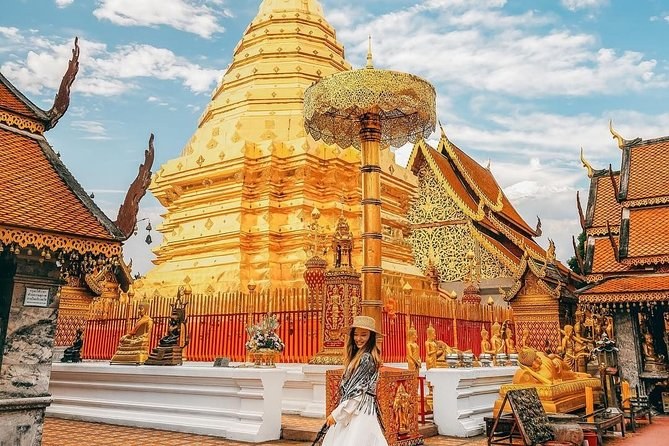
Doi Suthep photographs badly at the hour most people visit it. Full midday sun on gilded copper blows out, the terrace is crowded, and the view that everyone comes for is the one thing a phone cannot rescue. Go at either end of the day instead and it becomes one of the most photogenic places in the north. This post covers timing, the specific frames, the haze problem and the etiquette that stops a good photograph being a rude one.
The one thing that decides everything: haze
Northern Thailand burns its fields between roughly late February and April, and the valley fills with smoke. In a bad week the city simply is not visible from the viewpoint, and no filter recovers it. In November, December and January the air is washed and the grid is sharp all the way to the far mountains.
If you are travelling in March, plan the temple as a temple, not a viewpoint. The chedi, the cloister and the chanting are unaffected by haze, and the forest below is more comfortable than the terrace. Month-by-month conditions are in Doi Suthep month by month.
Dawn: the hour worth the alarm
The gate is open from five, and the sunrise departures are on the terrace before six. What you get is low, warm light raking across the gilding, mist sitting in the valley below, monks moving through the frame on their way to the chanting, and almost nobody else.
Practically: the sun comes up behind the city, so you are shooting into it from the viewpoint and with it from the chedi. Do the chedi first while the light is orange, then the viewpoint as it lifts. Which departures do that is compared on plan your visit.
Dusk: the other good hour
From about five in the afternoon the light goes long and gold, the terrace empties as the day tours leave, and by half past six the lamps are lit and Chiang Mai is coming on below. Evening departures are built around exactly this window and are the easier of the two to book.
The trade-off is honest: no mist, no monks on the path, and the valley is a field of lights rather than a landscape. Which of the two suits you is worked through in sunrise or evening at Doi Suthep.
The frames worth carrying a lens for
| Frame | Where from | When |
|---|---|---|
| The chedi against sky | North-west corner of the terrace | First light or last light |
| Umbrella and gilding detail | Close, from the cloister side | Any hour, overcast helps |
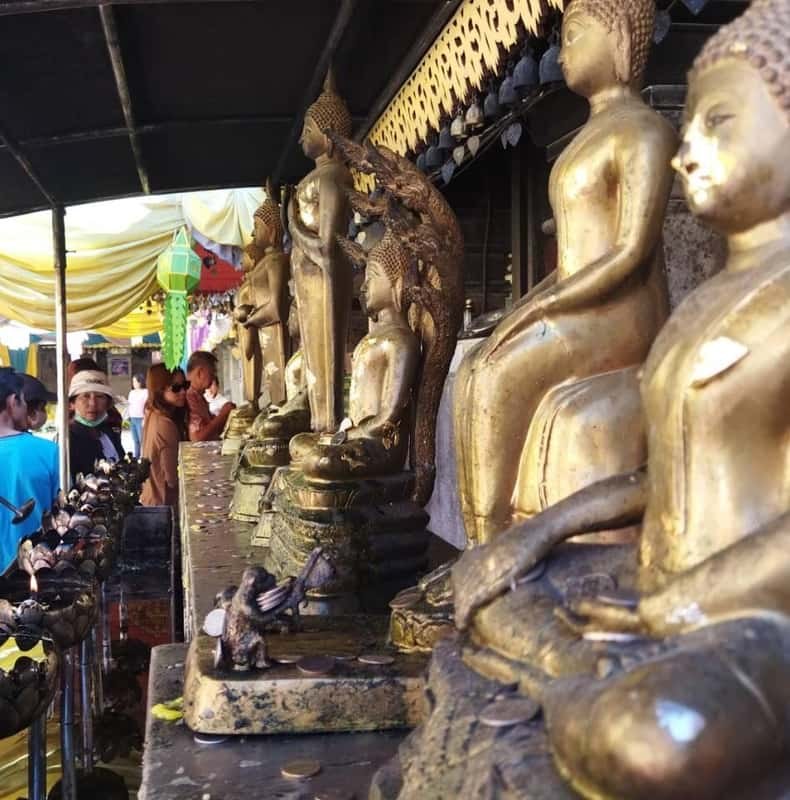
| The naga heads | Foot of the staircase, low angle | Early, before the coaches |
| The bell row receding | Along the cloister, wide open | Midday, it is shaded |
| City lights from the viewpoint | Viewpoint terrace, west side | 18:30–19:30 |
| Forest light at Wat Pha Lat | Beside the stream | Mid-morning shafts |
Kit that earns its place
- Something wide. The terrace is a walled rectangle and you cannot back up. 16–24mm equivalent does most of the work.
- Something longer. 50–85mm for the bells, the images and details of the gilding without stepping into anyone's circuit.
- A cloth. Warm humid air on cold glass after an air-conditioned van fogs a lens for five minutes.
- No tripod inside the wall. It is a working terrace with people walking circuits; brace against the cloister pillars instead.
Wat Pha Lat, and why photographers go twice
The forest temple below the summit is the other half of a photography day: moss on stone, a stream through the grounds, naga balustrades with ferns growing from them, and shafts of light through the canopy in mid-morning. It is quiet, it is green, and it is the antidote to a terrace of gold.
Reaching it on foot along the Monk's Trail adds the forest itself; the route, the times and the park fee are all on the Monk's Trail.
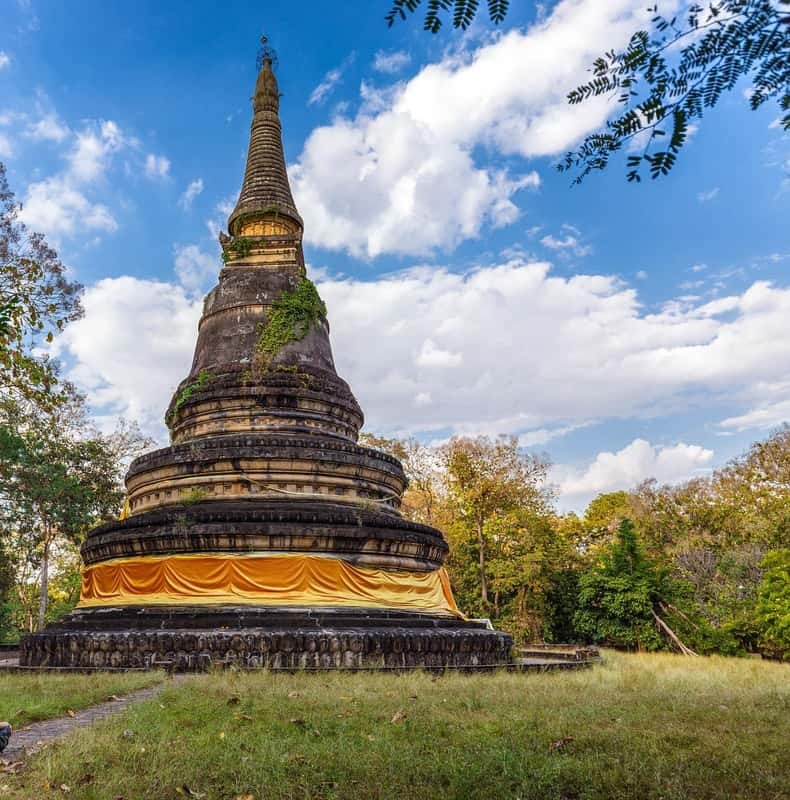
Wat Umong, at the foot of the mountain, is the third subject worth a memory card: brick tunnels lit only at their mouths, and a lake outside with trees hung with Buddhist sayings. It photographs best in the hour before the light goes.
Photographing people, and asking first
- Monks: ask, with a gesture if you have no Thai. Most say yes; a few are busy.
- Worshippers mid-prayer: do not. It is the one thing that reads as rude anywhere.
- Never turn your back on a Buddha image to pose in front of it.
- Women do not hand a camera or anything else directly to a monk.
Getting there with a photographer's schedule
The two useful windows are exactly the two that public transport handles worst: five in the morning and eight at night. A guided departure fixes the hour and, on the private options, lets you set the pace at each stop. One private day carries a photographer as the guide, which solves the problem of appearing in your own photographs.
A workable plan for one day
- Sunrise departure, on the terrace before six.
- The chedi in orange light, then the viewpoint as it lifts.
- Breakfast on the way down, then Wat Pha Lat for mid-morning shafts.
- Rest through the middle of the day, when nothing up there photographs well.
- Back up at five if you can, for the lamps and the city coming on.
Where the light falls, hour by hour
| Hour | On the terrace | What to shoot |
|---|---|---|
| 05:45–06:30 | Low orange light, lamps still on | Chedi, monks crossing, mist below |
| 06:30–08:00 | Rising, contrast climbing fast | The valley, before the haze lifts off it |
| 10:00–15:00 | Hard overhead sun on gold | Cloister interiors, bells, details in shade |
| 17:00–18:30 | Long gold, terrace emptying | Chedi against sky, umbrella detail |
| 18:30–19:30 | Lamps lit, blue hour | City lights from the viewpoint |
The two ends of that table are the two departure windows, which is not a coincidence: the operators built their schedules around the same light. Which of them suits your trip is worked through on plan your visit.
What to shoot when the view is gone
On a bad haze day the valley disappears and the standard viewpoint frame is simply not available. The terrace still is. Gold on a flat white sky is a legitimate look, the cloister is unaffected, and the interiors of both halls are lit by their own lamps rather than by the weather.
Go closer instead of wider: umbrella tiers, bell rims, the wear on the gilding at hand height, feet and hems as people walk their circuits. Every building worth a frame is identified on Wat Phra That Doi Suthep, and the Doi Suthep gallery shows what the place looks like in each of the two seasons.
Light planned? Book the departure that puts you there for it on Doi Suthep Tours.
Tours that fit this trip
Chosen for what this post covers, not for what sells.